
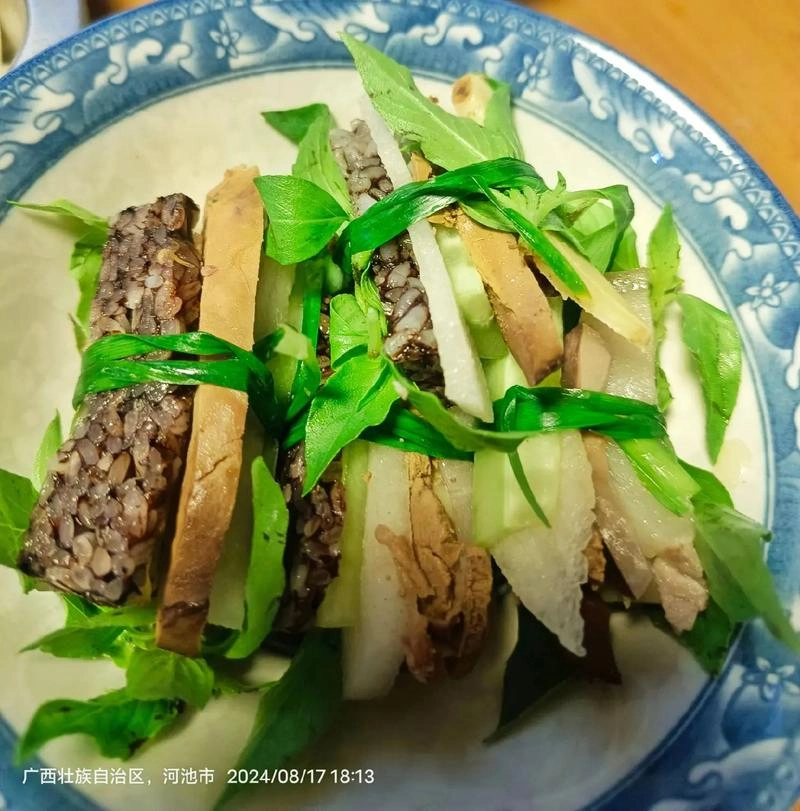
Les délices culinaires du sang de canard et des fougères: Un goût de la cuisine unique de Hechi
Introduction:
En tant que connaisseur alimentaire et praticien, Je suis toujours à la recherche de saveurs uniques et authentiques qui peuvent transporter les papilles vers de nouveaux horizons.. Aujourd'hui, Je vous invite à embarquer pour un voyage gastronomique à Hechi, une ville de la région autonome Zhuang du Guangxi en Chine, où un plat traditionnel à base de sang de canard, fougères, et des légumes sauvages comme “Lei Gong Gen” (également connue sous le nom de moutarde aux herbes) est apprécié pour son goût distinctif et sa signification culturelle.
Origine et origine culturelle:
Le plat, connu localement sous le nom “Sang de canard aux fougères et légumes verts sauvages,” a ses racines profondément ancrées dans les traditions culinaires rurales de Hechi. C'est un témoignage de l'ingéniosité et de la créativité de la population locale., qui dépendent depuis longtemps de la générosité naturelle de leur environnement. L’utilisation du sang de canard n’est pas seulement un clin d’œil à l’aviculture de la région mais aussi un moyen d’utiliser chaque partie de l’animal., reflétant une approche durable et holistique de l’alimentation.
Ingrédients et préparation:
Le plat commence par l'approvisionnement en produits frais, ingrédients de haute qualité. Le sang de canard provient de fermes locales, garantissant sa fraîcheur et sa pureté. Fougères, connus pour leur texture croustillante, sont méticuleusement sélectionnés pour leurs pousses tendres, alors que “Lei Gong Gen” et autres légumes sauvages sont cueillis à leur apogée, imprégnant le plat d'une explosion de saveurs naturelles.
Pour préparer le plat, le sang de canard est d'abord mijoté doucement pour conserver son onctuosité. Les fougères et les légumes verts sauvages sont blanchis pour éliminer toute amertume et rehausser leur couleur et leur texture.. Ces ingrédients sont ensuite combinés dans un bouillon riche, assaisonné d'un mélange d'épices et d'herbes traditionnelles chinoises qui marient harmonieusement les saveurs robustes du sang avec l'essence délicate des légumes verts.
Goût et texture:
Le plat obtenu est une symphonie de textures et de saveurs. Le sang de canard, avec sa douceur veloutée, contraste magnifiquement avec le croquant des fougères et la légère amertume, goût pourtant rafraîchissant des légumes sauvages. Le bouillon, infusé de l'essence des verts et de la profondeur des épices, fournit une toile de fond riche et satisfaisante au plat.
Description visuelle:
Esthétiquement, Le plat est un régal pour les yeux. Le rouge profond du sang de canard se détache sur le vert vibrant des fougères et des légumes sauvages., créer une présentation visuellement frappante et appétissante. Le plat est souvent garni d'une pincée d'herbes fraîches et d'un filet d'huiles aromatiques., ajoutant une touche finale d'élégance.
Plats et cuisine représentatives:
À Héchi, ce plat est souvent servi en plat principal, accompagné de riz vapeur ou de pains plats locaux. Il peut également faire partie d'une diffusion plus large lors d'occasions festives ou de réunions de famille., mettant en valeur l’amour de la région pour les plats copieux, repas faits maison.
Caractéristiques culinaires:
Les caractéristiques culinaires uniques de “Sang de canard aux fougères et légumes verts sauvages” réside dans son équilibre de saveurs et de textures. La richesse du sang de canard est contrebalancée par la fraîcheur des verts, créer un plat à la fois réconfortant et revigorant. C’est un témoignage de l’ingéniosité culinaire de la région et de son lien profond avec l’environnement naturel..
Conclusion:
En tant que professionnel de l'alimentation, J'ai toujours envie de partager et de célébrer les diverses traditions culinaires des différentes régions. Hechi “Sang de canard aux fougères et légumes verts sauvages” est un brillant exemple de la façon dont les ingrédients locaux et les méthodes de cuisson traditionnelles peuvent créer un plat non seulement délicieux mais aussi profondément enraciné dans la culture et l'histoire du lieu.. C'est un plat qui vous invite à savourer les saveurs du Hechi et à apprécier l'art de cuisiner avec ce que la nature offre..